
How Much Do You Really Know About Recycled Materials in Drinkware? (Part 11)
There are stories in every cup, and warmth in daily life. Hello everyone, welcome to "Dong Dong's Cup Talk". I wrote about recycled materials in the drinkware industry back in 2024. Though only two years have passed, I’ve realized my understanding of recycled materials at that time was incomplete. Like many people today, I held a misconception: “Any cup or kettle made from recycled materials is unsafe, https://www.umbottle.com/ProductsDetail-VB-10547.htmlunhealthy and low-quality, and will harm human health with long-term use.” With this biased viewpoint, naturally, the content I wrote back then contained inaccurate understandings. Over these two years, working with more and more buyers, especially those from the European market, I have gained a much more holistic understanding of “recycled materials”.
Now in mainstream European procurement systems, especially among influential brands, drinkware products made with compliant recycled materials are strongly promoted. Brands even include the proportion of recycled content as a core KPI for ESG environmental assessment.
So why is public perception of “recycled materials” completely different from industry standards and international market trends? What is the essential difference between toxic, low-grade recycled scrap and high-quality compliant recycled materials? For mainstream materials used in drinkware including PP, PC, AS, https://www.umbottle.com/ProductsDetail-VB-10547.htmlsilicone and stainless steel, what exactly are the differences in performance, safety and service life between virgin materials and recycled materials? Today, after careful analysis and extensive research, I revisit this topic on recycled materials. If you find what I share helpful, don’t forget to give me a like.
Attention please. Next, I will compare virgin materials and recycled materials for mainstream drinkware materials in various aspects. Those interested should read carefully.
To help you intuitively distinguish premium virgin materials, compliant recycled materials and inferior recycled scrap, I draw on market sampling test data and real factory production cases to break down the core differences between virgin materials and low-grade recycled scrap for seven major materials in the drinkware sector. https://www.umbottle.com/ProductsDetail-VB-10547.htmlAll content is based on real production and testing scenarios with no fictional information.
7. TPE Material (Commonly used for soft drinkware bases, anti-slip pads and flexible sealing edges)
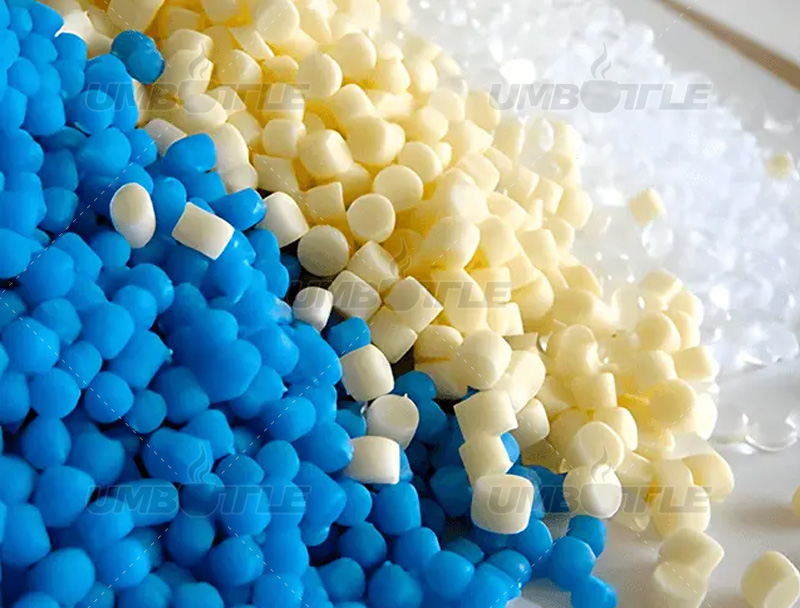
Color difference: Virgin food-grade TPE is transparent and soft with consistent pure color, free of specks or cloudiness, and features a fine, smooth surface. Inferior recycled TPE looks grey and dull with local color patches and hazy impurities. https://www.umbottle.com/ProductsDetail-VB-10547.htmlIt has a rough texture and poor light transmission.
Performance difference: Virgin TPE is soft and highly elastic, anti-slip and wear-resistant, tolerant to high and low temperatures, non-toxic and odor-free, with good adhesion and strong anti-aging properties. Inferior recycled TPE has poor elasticity and feels stiff; it tends to snap when stretched. https://www.umbottle.com/ProductsDetail-VB-10547.htmlIt will soften, turn sticky and release odd odors under high temperatures.
Durability difference: Virgin TPE accessories enjoy a long service life and resist deterioration under repeated washing and sun exposure. Inferior recycled TPE will harden, crack and peel off within half a year of use, completely losing its anti-slip and sealing functions.
Hazards and consequences: Inferior recycled TPE is blended with mixed waste rubber and plastic scraps containing residual additives and contaminants. It can emit strange odors and leach trace harmful substances under heat. https://www.umbottle.com/ProductsDetail-VB-10547.htmlIts rough surface easily traps grime and bacteria and is hard to clean, forming hidden risks to drinking water safety.
Real case evidence: In a 2025 sampling inspection of multiple affordable sports drinkware in Wenzhou, Zhejiang, safety hazards were detected on TPE anti-slip bases and flexible sealing edges of several cups. The implicated products were manufactured from mixed recycled TPE. Pungent odors and trace leaching of hazardous substances occurred after exposure to high heat, direct sunlight and hot water soaking. https://www.umbottle.com/ProductsDetail-VB-10547.htmlThe rough surfaces readily accumulated limescale and bacteria, contaminating the drinking water inside cups over prolonged use. These products failed food-contact safety standards and were ordered to be removed from shelves for rectification. (Source: 2025 Public Notice on Quality Sampling of Sports Daily Consumer Goods, Wenzhou City)
There are stories in the cup, life has warmth, use a good cup to enjoy a healthy life. We provide OEM business to more than 100 companies around the world, and produce more than 3 million pieces of various stainless steel/plastic cups and pots annually. Honoring promises, keeping reputation, ensuring quality and quantity, and delivering on time are our service principles and our professional commitment. Dongguan Zhan Yi Commodity Technology Co.,Ltd. welcomes global merchants to conduct on-site factory inspections and in-depth cooperation.