
How Much Do You Really Know About Recycled Materials in Drinkware? (Part 10)
There are stories in every cup, and warmth in daily life. Hello everyone, welcome to "Dong Dong's Cup Talk". I wrote about recycled materials in the drinkware industry back in 2024. Though only two years have passed, I’ve realized my understanding of recycled materials at that time was incomplete. Like many people today, I held a misconception: “Any cup or kettle made from recycled materials is unsafe, unhealthy and low-quality, and will harm human health with long-term use.” https://www.umbottle.com/ProductsDetail-VB-10489.htmlWith this biased viewpoint, naturally, the content I wrote back then contained inaccurate understandings. Over these two years, working with more and more buyers, especially those from the European market, I have gained a much more holistic understanding of “recycled materials”.
Now in mainstream European procurement systems, especially among influential brands, drinkware products made with compliant recycled materials are strongly promoted. https://www.umbottle.com/ProductsDetail-VB-10489.htmlBrands even include the proportion of recycled content as a core KPI for ESG environmental assessment.
So why is public perception of “recycled materials” completely different from industry standards and international market trends? What is the essential difference between toxic, low-grade recycled scrap and high-quality compliant recycled materials? For mainstream materials used in drinkware including PP, PC, AS, silicone and stainless steel, what exactly are the differences in performance, https://www.umbottle.com/ProductsDetail-VB-10489.htmlsafety and service life between virgin materials and recycled materials? Today, after careful analysis and extensive research, I revisit this topic on recycled materials. If you find what I share helpful, don’t forget to give me a like.
Attention please. Next, I will compare virgin materials and recycled materials for mainstream drinkware materials in various aspects. Those interested should read carefully.
To help you intuitively distinguish premium virgin materials, compliant recycled materials and inferior recycled scrap, https://www.umbottle.com/ProductsDetail-VB-10489.htmlI draw on market sampling test data and real factory production cases to break down the core differences between virgin materials and low-grade recycled scrap for seven major materials in the drinkware sector. All content is based on real production and testing scenarios with no fictional information.
6. ABS Material (Commonly used for drinkware outer shells, cup bases and accessory brackets)
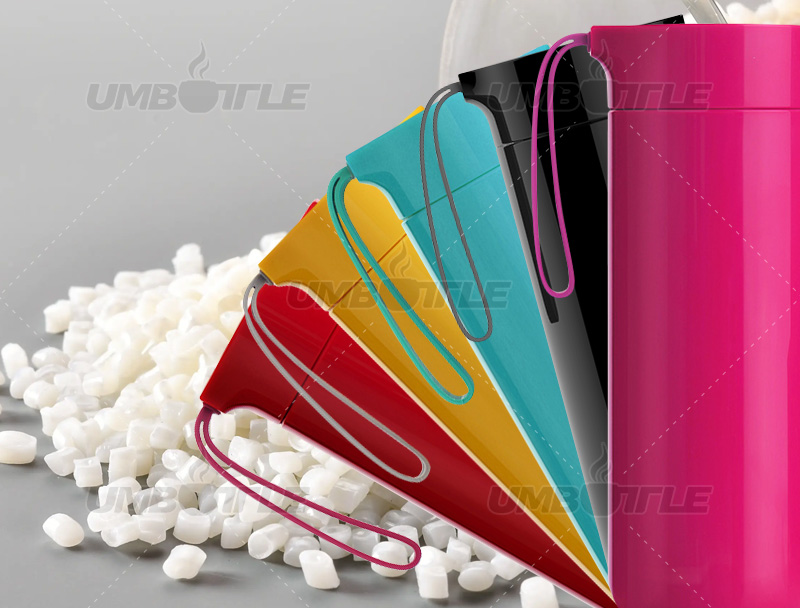
Color difference: Finished products made of virgin ABS pellets feature smooth, glossy surfaces with uniform, rich color. https://www.umbottle.com/ProductsDetail-VB-10489.htmlThey deliver neat results for painting and injection molding, free of defects. Inferior recycled ABS has a dull, rough surface with uneven color, scratches, specks and air voids, resulting in very poor flatness of finished parts.
Performance difference: Virgin ABS boasts high hardness, good impact resistance and strong compression resistance. Its stable structure resists deformation and withstands daily bumps and abrasion. Inferior recycled ABS has a loose molecular structure, insufficient hardness and poor toughness. https://www.umbottle.com/ProductsDetail-VB-10489.htmlIt tends to fracture under stress and has low heat resistance; it softens and deforms easily under high temperatures.
Durability difference: Virgin ABS accessories can be used for a long time and resist aging and breakage. Inferior recycled ABS is prone to abrasion, fading and embrittlement. Cracks and detachment occur after short-term use.
Hazards and consequences: ABS is mostly applied to non-food-contact parts of drinkware. However, inferior recycled ABS contains residual industrial additives and heavy metal impurities. Under prolonged skin contact and high-temperature conditions, https://www.umbottle.com/ProductsDetail-VB-10489.htmlharmful substances may leach slowly. In addition, it tends to shed fine particles and harbor bacteria, which indirectly compromises drinking water safety.
Real case evidence: In 2024, authorities in Foshan, Guangdong shut down a drinkware accessory manufacturer. The factory produced cup bases and outer shell brackets using industrial recycled ABS, supplying large volumes to makers of low-priced viral drinkware. Tests revealed excessive residues of heavy metals lead and cadmium in the accessories. https://www.umbottle.com/ProductsDetail-VB-10489.htmlHarmful substances leached gradually after prolonged skin contact and friction during routine washing. Severe particle shedding was also observed; debris could fall into cups and contaminate drinking water, creating long-term health risks. (Source: 2024 Industrial Product Quality Inspection Case, Foshan City)
There are stories in the cup, life has warmth, use a good cup to enjoy a healthy life. We provide OEM business to more than 100 companies around the world, and produce more than 3 million pieces of various stainless steel/plastic cups and pots annually. Honoring promises, keeping reputation, ensuring quality and quantity, and delivering on time are our service principles and our professional commitment. Dongguan Zhan Yi Commodity Technology Co.,Ltd. welcomes global merchants to conduct on-site factory inspections and in-depth cooperation.