
How Much Do You Really Know About Recycled Materials in Drinkware? (Part 1)
Stories live in cups, warmth resides in life. Hi everyone, welcome back to "Dong Dong's Cup Talk". I wrote about recycled material applications in the drinkware industry back in 2024. Though only two years have passed, I realize my earlier understanding of recycled materials was incomplete. Like many people today, https://www.umbottle.com/ProductsDetail-VB-10518.htmlI held a misconception at that time: “All cups and tumblers made from recycled materials are unsafe, unhealthy and inferior, and will harm human health with long term use.”
With such biased perceptions, my previous article inevitably contained inaccurate viewpoints. Interactions with numerous clients over the past two years, especially buyers from the European market, https://www.umbottle.com/ProductsDetail-VB-10518.htmlhave given me a far rounder understanding of “recycled materials”.
Within mainstream European procurement systems, particularly among influential brands, drinkware manufactured with compliant recycled feedstock is highly encouraged. https://www.umbottle.com/ProductsDetail-VB-10518.htmlSome brands even set the proportion of recycled material content as a core KPI for their ESG environmental assessment.
Why is public perception so sharply at odds with industry standards and global market trends when it comes to “recycled materials”? What fundamental differences separate toxic low grade scrap and high quality certified recycled materials? https://www.umbottle.com/ProductsDetail-VB-10518.htmlFor mainstream drinkware materials including PP, PC, AS, silicone and stainless steel, how do virgin and recycled variants differ in performance, safety and service life? After thorough research and reference review, I revisit this topic today. If you find this article insightful, please give it a like.
Important Reminder: Recycled stainless steel favoured by European buyers is NOT low grade scrap metal
Many consumers and industry insiders are confused: if drinkware made from recycled materials is supposedly hazardous to health, why do numerous European retailers and brand purchasers require Chinese OEM drinkware factories to provide documentation for remelted recycled stainless steel, https://www.umbottle.com/ProductsDetail-VB-10518.htmland prioritise tumblers produced from such material?
Here lies the key misunderstanding.
The “recycled materials” mentioned by the general public refer to low grade physically recovered scrap. Internationally certified “recycled feedstock”, by contrast, denotes high grade compliant material produced via chemical recycling or high temperature re smelting. https://www.umbottle.com/ProductsDetail-VB-10518.htmlThese are entirely distinct categories of raw material.
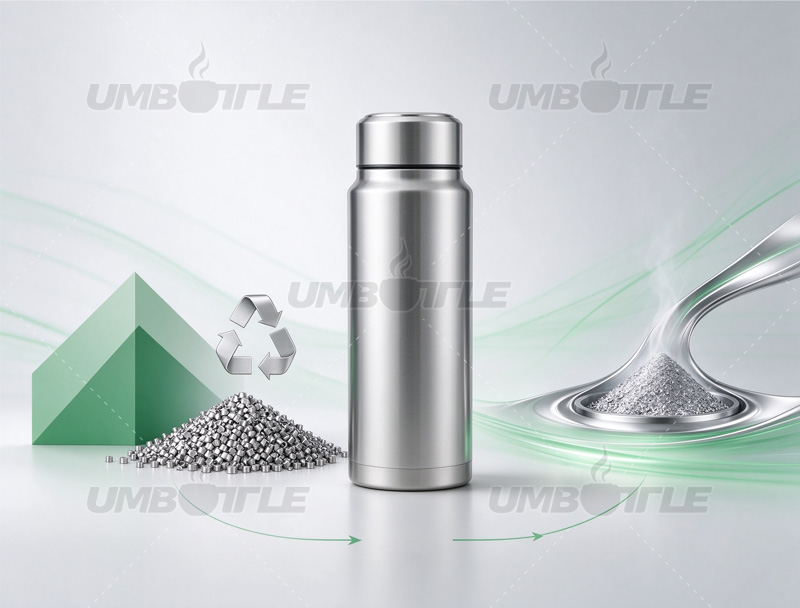
Europe’s recycled stainless steel framework enforces extremely strict production specifications and traceability systems. According to White Paper on Eco Friendly Material Application in China’s Drinkware Industry 2025, https://www.umbottle.com/ProductsDetail-VB-10518.htmlcompliant recycled stainless steel is not simply cast directly from discarded old cups or steel offcuts. Instead, qualified feedstock consists of industrial stainless steel waste and end of life food grade stainless steel components.
These go through more than ten processes: high temperature remelting, impurity purification, chemical composition re formulation, vacuum degassing and precision rolling. Heavy metal residues, https://www.umbottle.com/ProductsDetail-VB-10518.htmloil contaminants and oxide impurities are removed, yielding stainless steel raw material that meets food contact standards.
Real world order case from an anonymous Zhejiang export oriented drinkware factory (Factory A), 2024: This manufacturer fulfilled tumbler orders for a European retail chain using 100 % recycled 304 stainless steel. Finished products passed EU RoHS and LFGB food contact tests. https://www.umbottle.com/ProductsDetail-VB-10518.htmlCorrosion resistance, heavy metal leaching and high temperature tolerance test results matched those of tumblers made from virgin 304 stainless steel, with zero safety risks.
Environmentally speaking, stainless steel is infinitely recyclable. Production using compliant recycled stainless steel cuts ore mining and smelting energy consumption by over 60 %, delivering substantial carbon emission reductions. https://www.umbottle.com/ProductsDetail-VB-10518.htmlEuropean buyers promote recycled stainless steel drinkware not to downgrade product quality, but to advance environmental initiatives and ease industry wide ecological burdens while maintaining full safety and performance benchmarks. This represents a major low carbon trend across the global home goods sector.
Beyond the OEM factory example, authoritative domestic sampling test data also validates the safety of properly processed recycled stainless steel. In 2026, China Central Television partnered with accredited testing institutions on a special tumbler sampling inspection. Branded tumblers manufactured from properly remelted recycled 304 stainless steel achieved full compliance for heavy metal migration, corrosion resistance and heat resistance, showing no divergence from virgin material counterparts. https://www.umbottle.com/ProductsDetail-VB-10518.htmlAll non compliant samples stemmed from unpurified industrial grade scrap steel, not standardised recycled material workflows. (Source: CCTV 2026 tumbler quality sampling report). This clearly demonstrates: recycled stainless steel ≠ low grade scrap steel. Purification processing is the decisive dividing line.
There are stories in the cup, and life has warmth. Use the right cup and choose the right factory. We have dozens of patented cup and pot products and provide OEM services to the world. We have dozens of professional engineers who provide cup and pot product development services to the world. We have multiple complete current cup and pot product production lines to provide OEM services to the world. Dongguan Zhan Yi Commodity Technology Co.,Ltd. attaches great importance to contracts and quality. We welcome global merchants to conduct on-site factory inspections and in-depth cooperation.