
Will Plastic Water Cups Be Abandoned by the Market? (Part 1)
Every cup holds a story, and life is filled with warmth. Hello everyone, welcome to "Dong Dong's Cup Talk". I have posted numerous articles covering various plastic materials applied in plastic water cup production. Many readers even find my successive articles ranking top when searching related content online. https://www.umbottle.com/ProductsDetail-VB-10505.htmlToday, I still focus on plastic water cups, yet my main purpose is to vindicate them. In this era where self-media chase traffic, many bloggers and accounts act irresponsibly. To cater to public sentiment, they exaggerate the harms of plastic cups or quote sentences out of context. Now I will objectively and truthfully reveal what genuine qualified plastic water cups are really like.
In recent years, negative public opinions about plastic water cups have spread rampantly. Claims such as pungent odors, harmful substance precipitation under high temperatures, and plastic particles causing cancer have made consumers panic at the mere mention of plastic products. Some even assert that plastic water cups will be completely phased out by the market. But is this the actual truth? https://www.umbottle.com/ProductsDetail-VB-10505.htmlIs this widespread public panic over plastic cups based on scientific rational understanding, or just anxiety amplified by exaggeration and misunderstanding? The truth is far more complicated than online rumors. The potential safety risks of plastic water cups never stem from the materials themselves, but are caused by shoddy production, improper use and rampant misinformation. High-quality plastic water cups are completely safe and harmless as long as people select qualified materials and use them in standard ways. In addition, Europe’s plastic restriction policies are not targeted at compliant plastic water cups, and the two matters must not be confused.
I. Truth Behind Incidents: Fault of Materials or Inferior Production?
Most negative cases concerning plastic water cups on the market fall into three categories: strong peculiar smell, https://www.umbottle.com/ProductsDetail-VB-10505.htmldeformation under high temperature and precipitation of hazardous substances. The root causes of these problems lie almost entirely in shoddy manufacturing and adulteration, rather than qualified food-grade plastic materials.
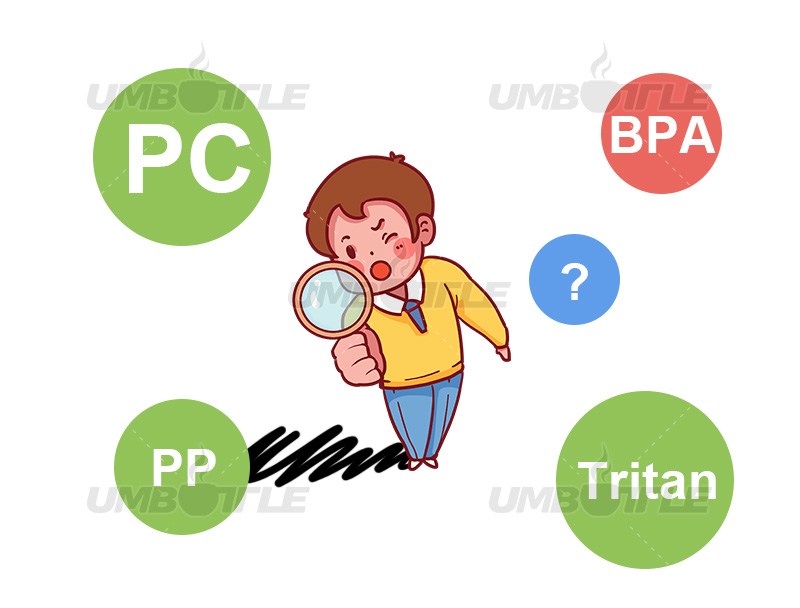
The most typical example is the bisphenol A controversy over PC water cups. Polycarbonate (PC) was once a widely used material for plastic cups, favored for its good light transmittance and smooth texture. However, some merchants concealed its inherent defect: PC material cannot withstand high temperatures and may release bisphenol A when heated above 60 degrees Celsius. As a recognized endocrine disruptor, bisphenol A disturbs human hormone secretion and particularly endangers children’s reproductive system development. https://www.umbottle.com/ProductsDetail-VB-10505.htmlSome unscrupulous merchants even play word games. They label products as food-grade PC without marking the note "for room-temperature use only". Worse still, they adopt PC for cup bodies yet secretly use inferior recycled materials for cup lids. When consumers fill such cups with boiling water and encounter health risks, they tend to blame all plastic water cups indiscriminately.
Plenty of cheap inferior cups cut costs by abandoning food-grade raw materials entirely. Some substitute industrial plastics for food-grade ones, which contain phthalates, lead, cadmium and other heavy metals. These cups emit sharp odors even when holding warm water, and long-term use damages the nervous and immune systems. Some products claim to be made of Tritan material but are blended with massive recycled scraps. https://www.umbottle.com/ProductsDetail-VB-10505.htmlThe price of brand-new raw materials exceeds 50,000 yuan per ton, while recycled materials cost merely around 5,000 yuan per ton. Such mixed materials have no guaranteed heat resistance or safety. Moreover, the unqualified rate of disposable plastic cups remains high in random inspections. Over 70% fail load-bearing tests, or adopt polystyrene (PS) to hold hot drinks, which releases styrene and other toxic substances at high temperatures.
False promotion of degradable plastic cups also misleads the public. Some products are advertised as fully degradable but actually mixed with non-degradable PP plastic, failing to degrade within 20 days in composting tests. A few were even detected to contain 3-chloro-1,2-propanediol, classified as Group 2B carcinogens by the World Health Organization, with the content exceeding the standard threefold. https://www.umbottle.com/ProductsDetail-VB-10505.htmlAfter these inferior products are exposed, consumers easily form the stereotype that all plastic water cups are toxic, ignoring the core fact: the ones that fail to meet standards are profit-driven cutting-corner manufacturers, rather than high-quality food-grade plastics including PP, PPSU and Tritan that conform to national safety regulations.
There are stories in the cup, and life has warmth. Choose a good factory to sell good water cups. We provide global OEM services for patented products and provide global OEM services with professional teams and high quality standards. Dongguan Zhan Yi Commodity Technology Co.,Ltd. specializes in high-quality cup and kettle products. We are willing to serve you wholeheartedly.